

SC ConsultingSolutions · Clarity · Impact
Menu

Workflow architecture for AI

Your workflow is the real AI strategy.

AI can accelerate a sound workflow. It cannot decide who owns the work, repair broken handoffs, or make unreliable data trustworthy.

SC Consulting helps you design the workflow first. Then we build the smallest AI system that makes it work better.

Your team stays in control. AI should help people make better decisions, not replace their judgement. We define access, exceptions, and approval points before the workflow goes live.

An Indian operations team connecting business information into a clear workflow with a human approval point

Before the technology

Why AI projects fail before the AI is built.

A tool cannot fix a workflow that nobody owns. It cannot make incomplete data dependable or decide what happens when the process breaks.

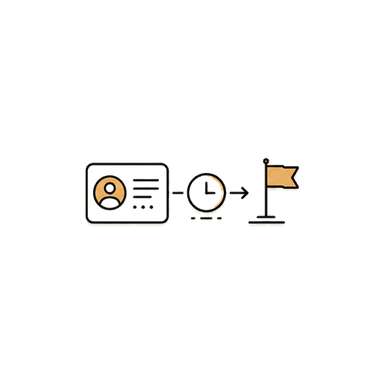
  1. Workflow handoffs and a broken connection
    01

    The workflow comes before the model

    Start with the real work: who does what, what information they need, where the handoffs fail, and what outcome needs to improve.

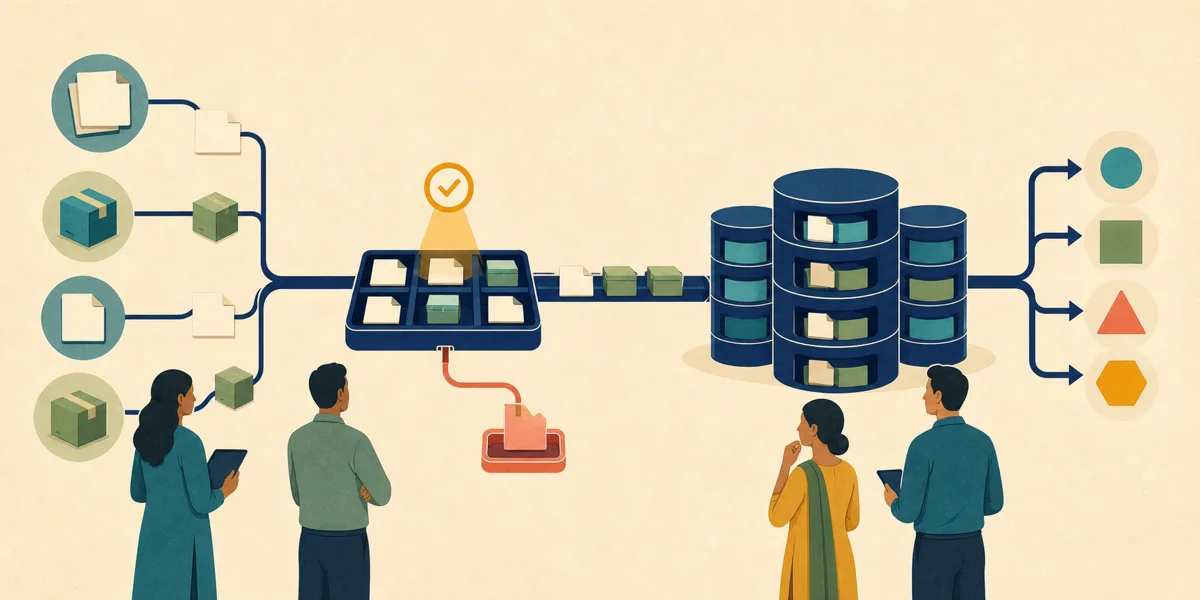
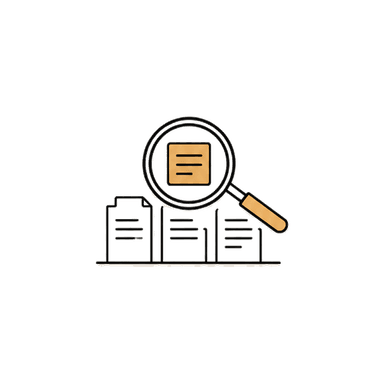
  2. Data inputs converging into a dependable channel
    02

    Data is a supply chain

    An AI system depends on the information that reaches it. If the inputs are late, incomplete, or scattered, the output will be hard to trust.

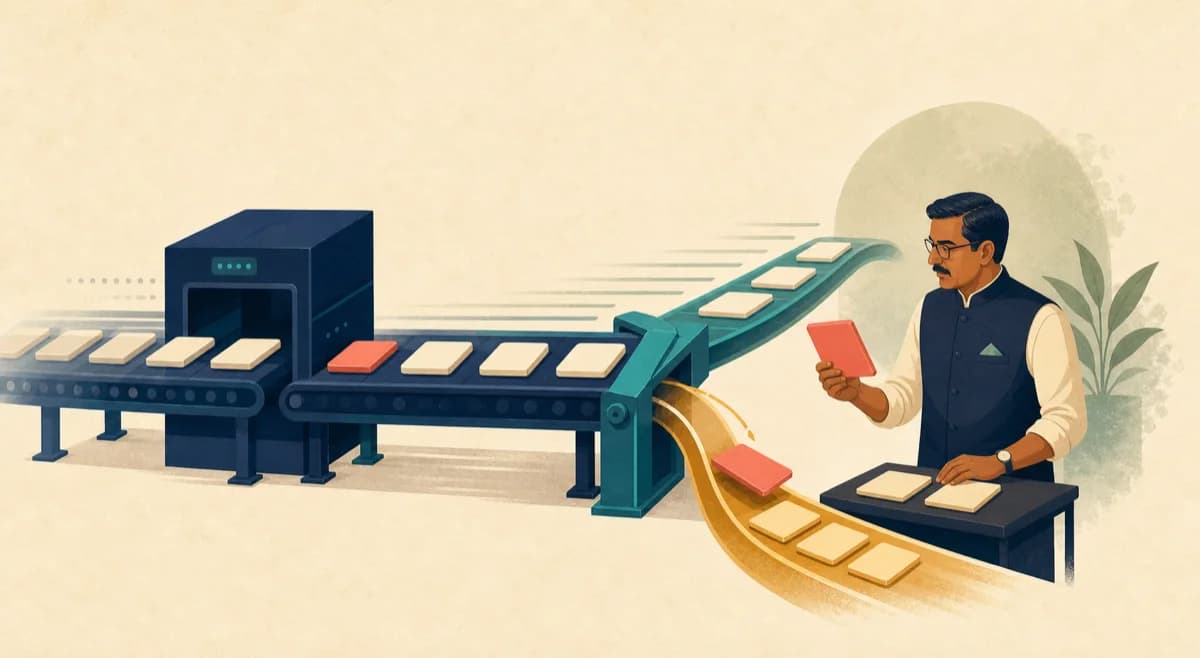
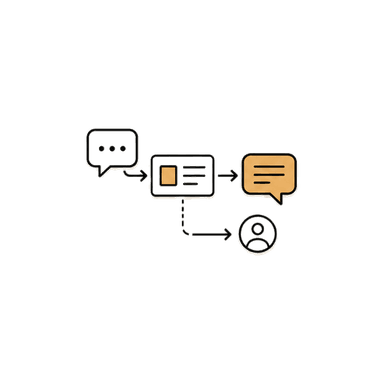
  3. Automated route pausing for contextual human review
    03

    Automation is not intelligence

    Automation moves a task from one place to another. An intelligent workflow also knows what context it needs, when to stop, and when a person must decide.

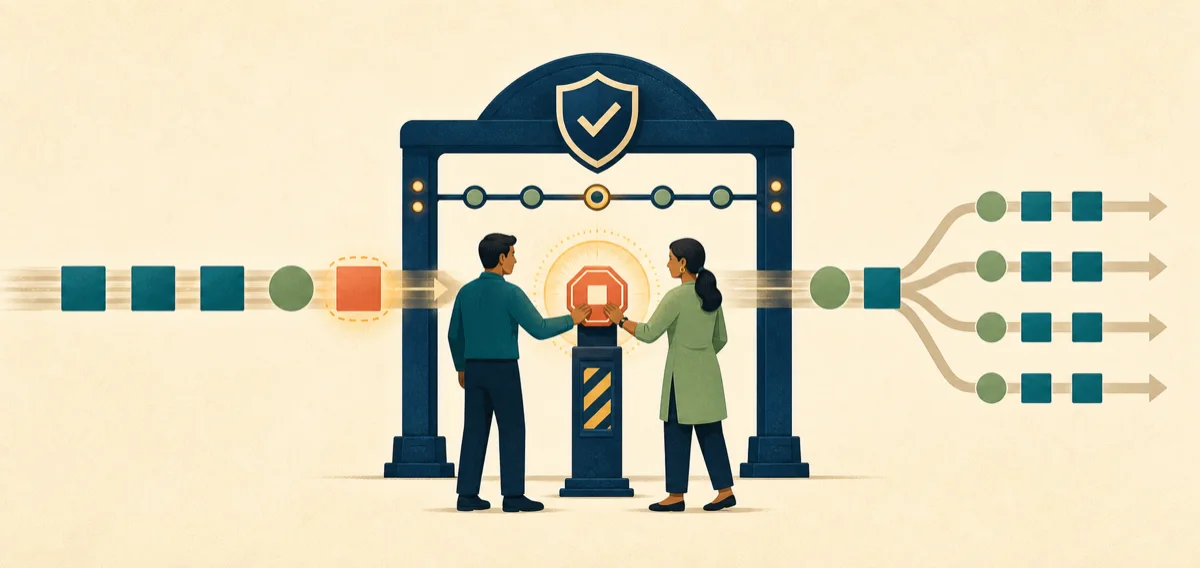
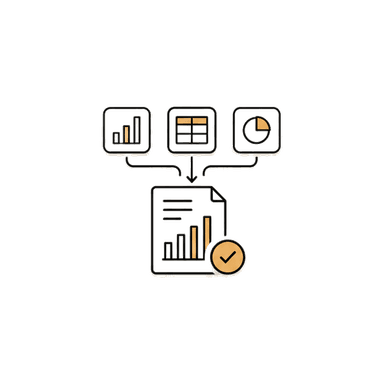
  4. Workflow passing through governance and exception controls
    04

    Governance prevents faster mistakes

    Without boundaries, an AI workflow can make the same error at greater speed. We design access, review points, and exception paths before work goes live.

That is why every engagement begins with workflow architecture, not a tool shortlist.

Identify your biggest workflow bottleneck

Problems worth solving

Start where work is slow, repetitive, or hard to see.

A focused system starts with one bounded workflow and a clear owner

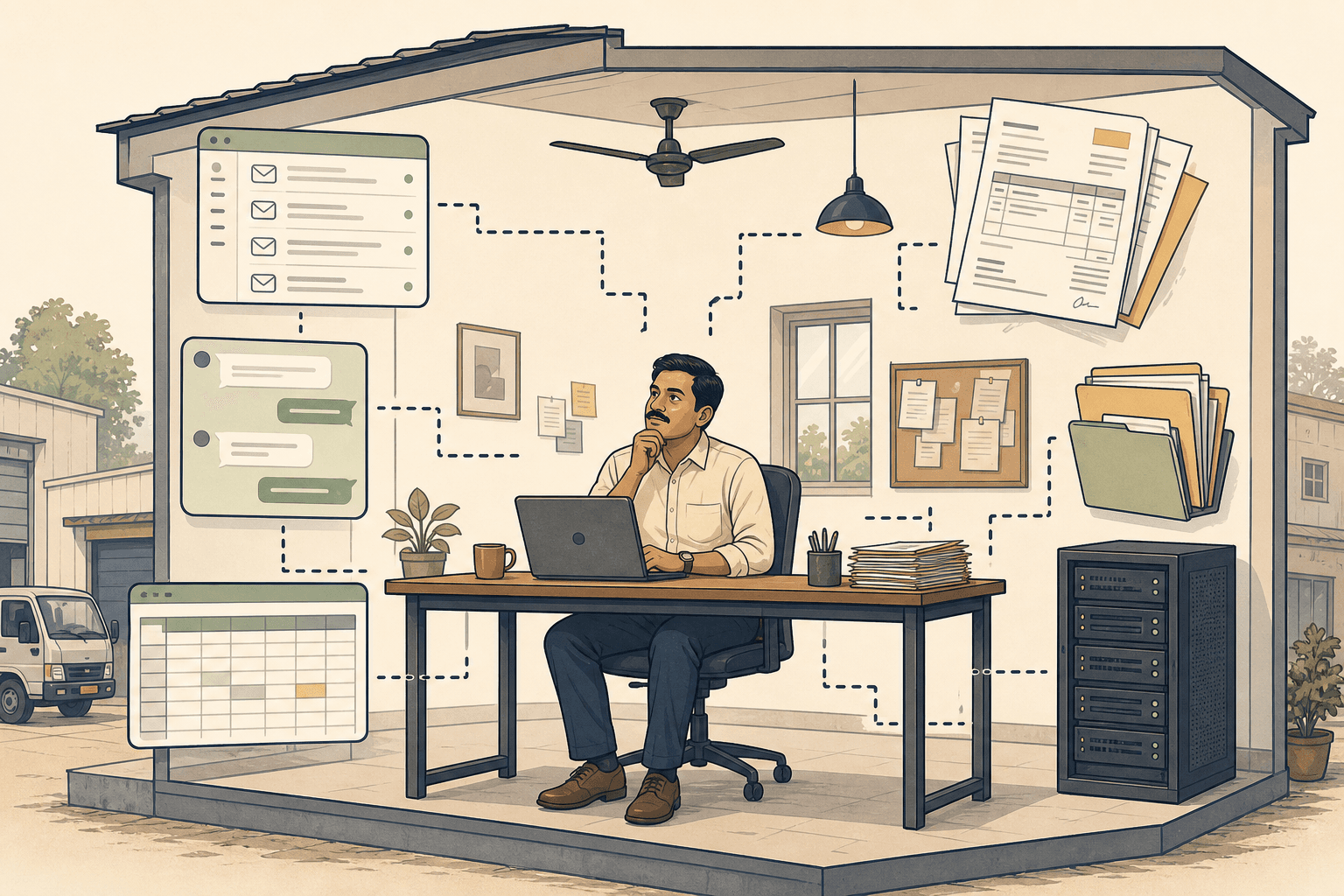
A business back office with information fragmented across messages, spreadsheets, paper records, folders, and a legacy server
If this is happeningA focused system may help with
  1. If this is happeningCustomer enquiries are scattered across WhatsApp and email
    A focused system may help with

    Triage, knowledge retrieval, response preparation, and escalation

  2. If this is happeningTeams spend hours reading PDFs and entering the same details
    A focused system may help with

    Document extraction, classification, and structured review queues

  3. If this is happeningSales follow-ups depend on someone remembering the next step
    A focused system may help with

    Follow-up visibility, prioritisation, and accountable handoffs

  4. If this is happeningStaff cannot find the latest policy, quote, or operational detail
    A focused system may help with

    Controlled internal search and knowledge assistance

  5. If this is happeningReports take days to prepare from multiple spreadsheets
    A focused system may help with

    Data collection, draft reporting, and reviewable exception summaries

  6. If this is happeningApprovals move slowly between people and tools
    A focused system may help with

    Workflow orchestration with explicit human approval points

  7. If this is happeningThe same information is copied into multiple systems
    A focused system may help with

    Scoped automation between approved systems

What this can look like in practice

Recognisable operational problems. Focused responses.

Illustrative scenarios, not client case studies or promised results.

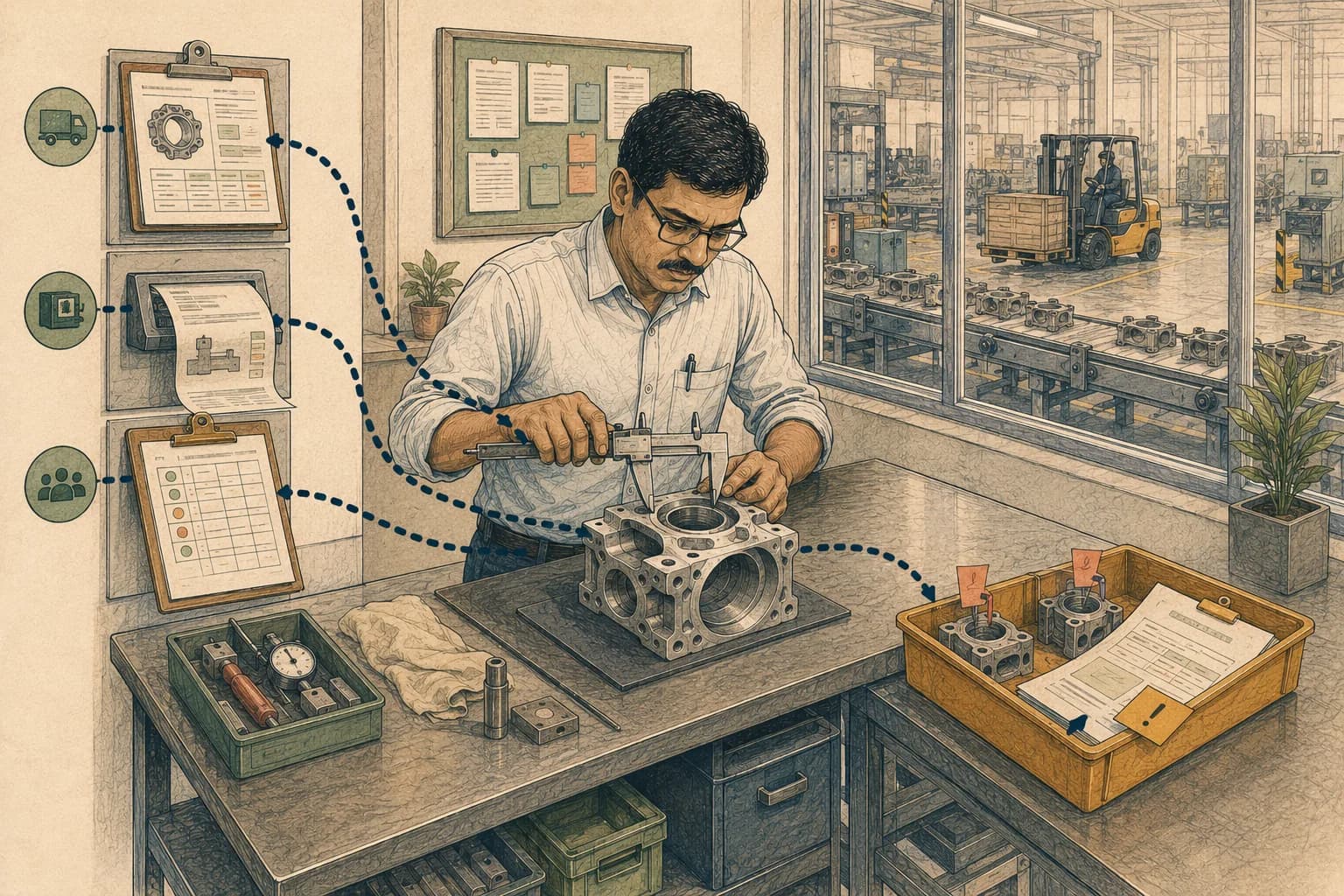
Quality engineer reviewing inspection records, a measured component, and an exception tray in a manufacturing office.

Illustrative workflow

Manufacturing

The problem
Quality engineers receive inspection reports from machines, suppliers, and shift teams in different formats. Finding a missing measurement or a repeat defect takes longer than the review should.
The solution
A bounded system extracts the agreed fields, groups related observations, and puts incomplete or unusual records into an engineer’s review queue.
The outcome
The engineer starts with the exceptions and source records, rather than a pile of files, and remains responsible for every technical judgment.

A useful first conversation starts here

AI may be worth exploring if these problems sound familiar.

Bring one workflow that is costing time, quality, or control. We will map the handoffs, information, and decisions involved, then decide whether there is a bounded next step worth taking.

A workflow moving through three lenses: the workflow, the friction, and the next useful move.
  1. The workflow
  2. The friction
  3. The next useful move
  • Your team spends hours copying or re-entering information.
  • Important knowledge sits with a few experienced employees.
  • Customers wait too long for routine answers.
  • Reports take days to prepare.
  • Staff repeatedly search for the same documents or answers.
  • Work moves between email, WhatsApp, spreadsheets, and several business systems.
  • You can name one workflow whose outcome matters enough to improve.

What we build

Focused systems for work that matters every day.

Choose one important piece of work. We build the focused system that helps your team do it with less delay, less repetition, and clearer review.

  • 01

    Give staff trusted answers

    Reliable answers from approved business knowledge, policies, and documents.

    Input
    Approved knowledge
    Action
    Retrieve
    Review
    Staff verifies
  • 02

    Read and organise business documents

    Extract, classify, summarise, and route document information for review.

    Input
    PDFs and forms
    Action
    Extract and classify
    Review
    Staff reviews
  • 03

    Keep customer follow-ups from slipping through

    Surface accounts, conversations, and next actions that need attention.

    Input
    Conversations
    Action
    Surface next action
    Review
    Owner acts
  • 04

    Answer routine customer questions faster

    Prepare responses, retrieve information, and route exceptions to the right person.

    Input
    Questions
    Action
    Prepare response
    Review
    Staff handles exceptions
  • 05

    Help staff find the right information

    Help staff find the right answer across approved files and operational records.

    Input
    Files and records
    Action
    Find the answer
    Review
    Staff checks source
  • 06

    Prepare recurring reports with less manual work

    Make recurring data collection and report preparation more reliable and reviewable.

    Input
    Source data
    Action
    Prepare draft
    Review
    Owner approves
  • 07

    Cut repeated manual handoffs

    Connect repeatable steps across the tools teams already use, with defined handoffs and approval points.

    Input
    Repeated tasks
    Action
    Route and prepare
    Review
    Human approves
  • 08

    Coordinate complex work across specialised AI roles

    Coordinate specialised AI roles for a bounded operational workflow where one assistant is not enough.

    Input
    Bounded tasks
    Action
    Coordinate roles
    Review
    Owner reviews

The right solution may be smaller than you expect. The goal is a better workflow, not AI for its own sake.

The SC Workflow Method

The SC Consulting Framework

The method starts with the work, strengthens the information behind it, defines the controls, and only then builds the smallest useful system.

  1. 01

    Intake

    Workflow today

    Inputs arrive in different places.

    Workflow tomorrow
    Visible owner

    One intake path captures the right context.

  2. 02

    Prepare

    Workflow today

    People chase context, reconcile data, and re-enter it.

    Workflow tomorrow
    Visible owner

    Data is prepared, checked, and routed deliberately.

  3. 03

    Decide

    Workflow today

    Handoffs are opaque; decisions wait or vary by person.

    Workflow tomorrow
    Visible ownerHuman approval

    Agents assist at defined steps; people retain consequential decisions.

  4. 04

    Learn

    Workflow today

    Exceptions disappear into inboxes and spreadsheets.

    Workflow tomorrow
    Visible owner

    Exceptions, outcomes, and ownership stay visible for improvement.

Learning returns to intake

  1. 01

    Map the work

    Find the inputs, decisions, handoffs, delays, and exceptions.

  2. 02

    Strengthen the data supply chain

    Identify the information the workflow needs and what must be checked before AI uses it.

  3. 03

    Design the controls

    Decide what AI can do, what it must not do, and where a person reviews the work.

  4. 04

    Build, measure, improve

    Put the smallest useful system into real work, learn from exceptions, and improve before expanding.

Good pipeline. Good data. Better AI decisions.

Ways to work together

Choose the next useful step, not the largest possible programme.

Every engagement is scoped to the business, the workflow, and the level of internal capability. The goal is useful capability and a clean handover, not dependence on a consultant.

01

Best forTeams with a real bottleneck but no clear first AI project.

Find Your Best First AI Project

What we doMap the workflow, assess the information and systems involved, and compare practical options.

Deliverables

  • Workflow and bottleneck mapping
  • Data, access, and integration review
  • Prioritised use cases and trade-offs
  • Practical architecture and operating recommendations
  • A success measure for the first initiative

You leave withA workflow map, a data and integration view, a prioritised roadmap, and a recommendation for the first project.

OutcomeA clear decision about what to pursue first, and what not to pursue yet.

TimeScoped to the workflow and the information available.

Find your best first AI project
02

Best forTeams ready to improve one owned workflow.

Build Your First Production AI Workflow

What we doDesign the workflow, connect the relevant information, set access and approval controls, then test it with real cases.

Deliverables

  • Solution and integration design
  • Data pipeline and knowledge-source setup
  • Workflow or agent configuration with scoped access
  • Connection to relevant business systems
  • Testing against representative cases
  • Documentation, handover, and initial team training

You leave withA working workflow, operating documentation, team handover, and a next-step improvement plan.

OutcomeA practical system your team can use, review, and improve.

TimeScoped to the workflow, integrations, and controls required.

See whether this workflow is worth building
03

Best forLeaders who need the workflow to stick after it goes live.

Help Your Team Successfully Use AI

What we doTrain the team, review exceptions and usage, improve the workflow, and decide what to scale next.

Deliverables

  • Team training in live scenarios
  • Usage, quality, cost, and outcome reviews
  • Exception handling and governance refinement
  • Workflow iteration based on real use
  • New use-case evaluation and implementation guidance
  • Executive and product leadership advisory

You leave withClearer operating controls, trained users, and an evidence-based next-step decision.

OutcomeA team that can run the workflow with confidence.

TimeOngoing support is optional and scoped to the team’s needs.

Help your team use AI well

You retain the documentation, workflow playbooks, and handover materials needed to operate the work after the engagement.

A candid fit check

Not for everyone. That is deliberate.

SC Consulting is probably not the right fit if you only want a generic chatbot, a tool recommendation, or AI training without an operational problem to solve.

It is also not a fit if no one can own the workflow, or if you expect AI to make consequential decisions without human judgement. The work is for teams ready to improve one important workflow with clear ownership and realistic boundaries.

What happens next

A useful conversation, not a generic demo.

  1. 01

    Bring one workflow

    Tell us where the work slows down, repeats, or gets lost between systems and people.

  2. 02

    Review the reality

    We look at the information available, the people involved, and the constraints that matter.

  3. 03

    Get a clear recommendation

    You leave with a view on whether to build, improve the process first, wait, or not use AI at all.

  4. 04

    Decide the next step

    If there is a fit, we outline the right next engagement. If not, you still have a clearer decision.

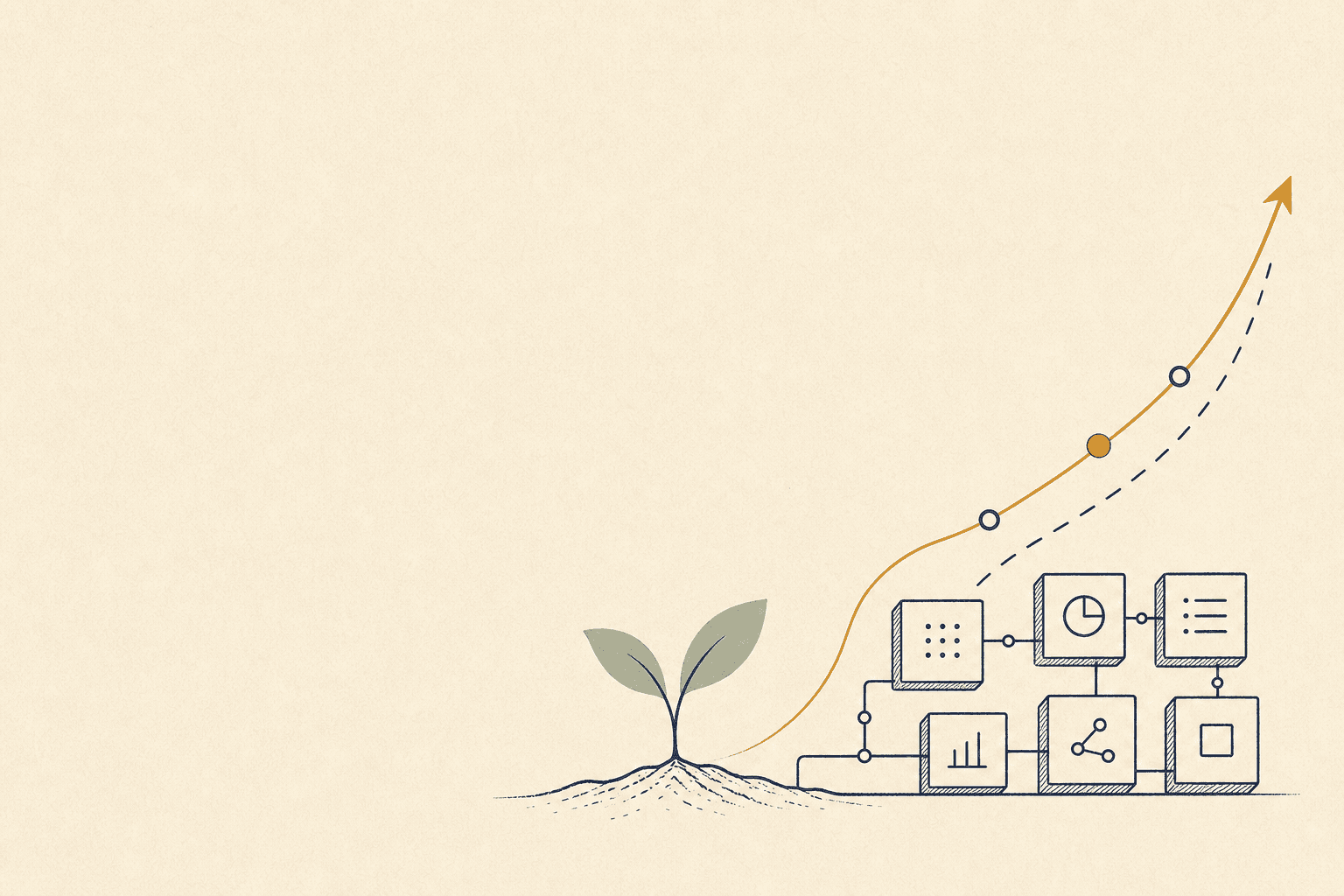
A seedling beside connected data blocks and an upward path, representing strong foundations and growing capability

One workflow. One useful conversation.

Bring the workflow that is frustrating your team.

In 30 minutes, we will look at the work, the information behind it, and where it slows down. You will leave with a clearer next step, even if AI is not the answer yet.

Identify your biggest workflow bottleneckNo generic demo. No obligation.

FAQ

Frequently asked questions

Do we need clean data before we start?

No. You need enough usable information for one bounded workflow. We identify the gaps, the source systems, and the work needed before recommending a build.

Can this work with Excel, WhatsApp, or the software we already use?

Usually, yes. We first check what information can be accessed securely, then build around the tools your team already uses where that makes sense.

Can we start with one workflow?

Yes. One workflow is the best way to test the data, controls, and team adoption before expanding further.

How long does an engagement take?

It depends on the workflow, data, integrations, and controls involved. We will give you a practical timeline before recommending any work.

Will AI replace employees?

No, that is not the aim. The aim is to reduce repetitive work, prepare information faster, and help people focus on decisions that need judgement.

Do we need to replace our existing software?

Usually not. We first review whether your existing systems can securely provide the information the workflow needs, then recommend the smallest sensible change.

Som Chakravarty, founder of SC Consulting

About Som Chakravarty

AI works when it is built on a solid foundation

AI initiatives do not succeed because a model is impressive. They succeed when the workflow is clear, the data is dependable, and people know where judgment still belongs.

I bring 18 years of experience across enterprise SaaS, AI/ML platforms, and UX. In my last organization, I led product strategy and execution for a $100M+ ARR platform spanning six product lines, including a legacy-to-cloud-native transformation on AWS. That work reinforced a practical lesson: technology only creates value when product, data, operations, and adoption are designed together.

My foundation is in user experience design and product management. I hold a Master of Human-Computer Interaction from Carnegie Mellon and have led user research, rapid prototyping, design-system work, and product strategy for complex enterprise workflows. I use that perspective to make AI systems useful in the work people actually do, not simply technically possible.

Now I help teams turn that foundation into production AI systems, from agent workflows and RAG pipelines to the operating measures that show whether they are improving the business.

  • 18 years in product, AI/ML platforms, and UX
  • CMU MHCI
  • Former Director of Product Management
  • Bangalore, India